PowderPro AB wishes all our customers and partners Merry Christmas & A Happy New Year!
News
Ceramics Expo 2016

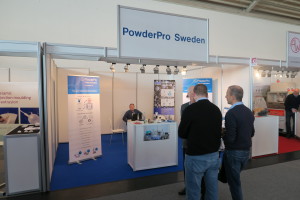
Welcome to PowderPro’s booth No 128 at the Ceramics Expo April 26-28, 2016 in Cleveland, Ohio. We look forward meeting you and to discuss how our Freeze Granulation technology can improve the granule quality of your powder and binder system for to make high quality ceramics.
At this Ceramics show we look forward to meet PowderPro’s largest market, where we have a lot of applications trough out the years.
Additive-free hot-pressed silicon carbide ceramics-A material with exceptional mechanical properties
P. Šajgalík, J. Sedláček, Z. Lenčéš, J. Dusza, H.-T. Lin
Abstract
Densification of silicon carbide without any sintering aids by hot-pressing and rapid hot pressing was investigated. Full density (>99% t.d.) has been reached at 1850 °C, a temperature of at least 150–200 °C lower compared to the up to now known solid state sintered silicon carbide powders. Silicon carbide was freeze granulated and heat treated prior the densification. Evolution of microstructure, mechanical properties and creep behavior were evaluated and compared to reference ceramics from as received silicon carbide powder as well as those of commercial one. Novel method results in dense ceramics with Vickers hardness and indentation fracture toughness of 29.0 GPa and 5.25 MPa m1/2, respectively. Moreover, the creep rate of 3.8 × 10⁻⁹ s−1 at 1450 °C and the load of 100 MPa is comparable to the commercial α-SiC solid state sintered at 2150 °C.
Keywords
Silicon carbide, Hot pressing, Microstructure, Mechanical properties, Creep resistance, freeze granulation
Dry powder formulation of plasmid DNA and siRNA for inhalation
Chow MY, Lam JK
Abstract
Nucleic acid therapeutics has huge potential for the treatment of a wide range of diseases including respiratory diseases. Plasmid DNA (pDNA) and small interfering RNA (siRNA) are the two most widely investigated nucleic acids for therapeutic development. However, efficient and safe delivery of nucleic acids is still a major hurdle in translating nucleic acid therapy into clinical practice. For the treatment of respiratory diseases, administration via inhalation is the most direct and effective way to deliver therapeutic nucleic acids to the lungs. Although liquid aerosol formulation is investigated in most of the studies, it is not desirable in terms of maintaining the stability of nucleic acid especially during long-term storage. This problem could be circumvented by formulating the therapeutic nucleic acids into dry powder for inhalation, and should be considered as the future direction of developing inhalable nucleic acids. In this review, the three major particle engineering methods investigated for the preparation of inhalable pDNA and siRNA formulations, including spray drying (SD), spray freeze drying (SFD) and supercritical fluid (SFC) drying, are discussed and compared. Moreover, common assessment methods and the challenges of evaluating the biological activities of inhalable nucleic acid powders are also reviewed.
Dry powder inhaler formulation of high-payload antibiotic nanoparticle complex intended for bronchiectasis therapy: Spray drying versus spray freeze drying preparation
Yu H, Teo J, Chew JW, Hadinoto K
Abstract
Inhaled nano-antibiotics have recently emerged as the promising bronchiectasis treatment attributed to the higher and more localized antibiotic exposure generated compared to native antibiotics. Antibiotic nanoparticle complex (or nanoplex in short) prepared by self-assembly complexation with polysaccharides addresses the major drawbacks of existing nano-antibiotics by virtue of its high payload and cost-effective preparation. Herein we developed carrier-free dry powder inhaler (DPI) formulations of ciprofloxacin nanoplex by spray drying (SD) and spray freeze drying (SFD). d-Mannitol and l-leucine were used as the drying adjuvant and aerosol dispersion enhancer, respectively. The DPI formulations were evaluated in vitro in terms of the (1) aerosolization efficiency, (2) aqueous reconstitution, (3) antibiotic release, and (4) antimicrobial activity against respiratory pathogen Pseudomonas aeruginosa. The SFD powders exhibited superior aerosolization efficiency to their SD counterparts in terms of emitted dose (92% versus 66%), fine particle fraction (29% versus 23%), and mass median aerodynamic diameter (3μm versus 6μm). The superior aerosolization efficiency of the SFD powders was attributed to their large and porous morphology and higher l-leucine content. While the SFD powders exhibited poorer aqueous reconstitution that might jeopardize their mucus penetrating ability, their antibiotic release profile and antimicrobial activity were not adversely affected.
KEYWORDS:
Antibiotic nanoparticles, Chronic lung infection, Cystic fibrosis, Dry powder inhaler, Pulmonary drug delivery, spray freeze drying
Spray Freeze-Drying as an Alternative to the Ionic Gelation Method to Produce Chitosan and Alginate Nano-Particles Targeted to the Colon
Gamboa A, Araujo V, Caro N, Gotteland M, Abugoch L, Tapia C
Abstract
Chitosan and alginate nano-composite (NP) carriers intended for colonic delivery containing prednisolone and inulin were obtained by two processes. Spray freeze-drying using chitosan (SFDC) or alginate (SFDA) was proposed as an alternative to the traditional chitosan-tripolyphosphate platform (CTPP). NPs were fully characterised and assessed for their yield of particles; level of prednisolone and inulin release in phosphate and Krebs buffers; and sensitivity to degradation by lysozyme, bacteria and faecal slurry. NPs based on chitosan showed similar properties (size, structure, viscoelastic behaviour), but those based on SFDC showed a higher mean release of both active ingredients, with similar efficiency of encapsulation and loading capacity for prednisolone but lower for inulin. SFDC was less degraded in the presence of lysozyme and E. coli and was degraded by B. thetaiotaomicron but not by faecal slurry. The results obtained with SFDA were promising because this NP showed good encapsulation parameters for both active ingredients and biological degradability by E. coli and faecal slurry. However, it will be necessary to use alginate derivatives to reduce its solubility and improve its mechanical behaviour.
KEYWORDS:
alginate; biodegradable polymers; chitosan; colonic drug delivery; nanoparticles; spray freeze-drying
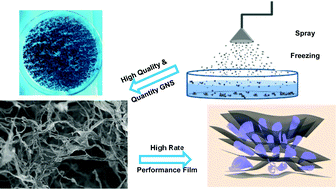
Mass production of graphene nanoscrolls and their application in high rate performance supercapacitors
The output of graphene nanoscrolls (GNSs) has been greatly enhanced to the gram-level by using an improved spray-freeze-drying method without damaging the high transforming efficiency (>92%). The lowest bulk density of GNS foam reaches 0.10 mg cm−3. Due to the unique morphology and high specific surface area (386.4 m2 g−1), the specific capacitances of the GNSs (90–100 F g−1 at 1 A g−1) are all superior to those of multiwalled carbon nanotubes meanwhile maintaining excellent rate capabilities (60–80% retention at 50 A g−1). For the first time, all-graphene-based films (AGFs) are fabricated via the intercalation of GNSs into graphene layers. The AGF exhibits a capacitance of 166.8 F g−1 at 1 A g−1 and rate capability (83.9% retention at 50 A g−1) better than those of pure reduced graphene oxide (RGO) films and carbon nanotubes/graphene hybrid films (CGFs).
Production of Inhalation Phage Powders Using Spray Freeze Drying and Spray Drying Techniques for Treatment of Respiratory Infections
Leung SS, Parumasivam T, Gao FG, Carrigy NB, Vehring R, Finlay WH, Morales S, Britton WJ, Kutter E, Chan HK
Abstract
PURPOSE:
The potential of aerosol phage therapy for treating lung infections has been demonstrated in animal models and clinical studies. This work compared the performance of two dry powder formation techniques, spray freeze drying (SFD) and spray drying (SD), in producing inhalable phage powders.
METHOD:
A Pseudomonas podoviridae phage, PEV2, was incorporated into multi-component formulation systems consisting of trehalose, mannitol and L-leucine (F1 = 60:20:20 and F2 = 40:40:20). The phage titer loss after the SFD and SD processes and in vitro aerosol performance of the produced powders were assessed.
RESULTS:
A significant titer loss (~2 log) was noted for droplet generation using an ultrasonic nozzle employed in the SFD method, but the conventional two-fluid nozzle used in the SD method was less destructive for the phage (~0.75 log loss). The phage were more vulnerable during the evaporative drying process (~0.75 log further loss) compared with the freeze drying step, which caused negligible phage loss. In vitro aerosol performance showed that the SFD powders (~80% phage recovery) provided better phage protection than the SD powders (~20% phage recovery) during the aerosolization process. Despite this, higher total lung doses were obtained for the SD formulations (SD-F1 = 13.1 ± 1.7 × 10⁴ pfu and SD-F2 = 11.0 ± 1.4 × 10⁴ pfu) than from their counterpart SFD formulations (SFD-F1 = 8.3 ± 1.8 × 10⁴ pfu and SFD-F2 = 2.1 ± 0.3 × 10⁴ pfu).
CONCLUSION:
Overall, the SD method caused less phage reduction during the powder formation process and the resulted powders achieved better aerosol performance for PEV2.
KEYWORDS:
aerosols; antibiotic-resistant bacteria; phage therapy; pulmonary infections
Solidification of nanosuspensions for the production of solid oral dosage forms and inhalable dry powders
Maria Malamatari, Satyanarayana Somavarapu, Kevin M.G. Taylor & Graham Buckton
Abstract
Keywords
- dry powder for inhalation, matrix former, nanosuspension, redispersibility, solidification, solid oral dosage forms, spray-freeze drying
Inhalable nanocomposite microparticles: Preparation, characterization and factors affecting formulation
Elsayed I, AbouGhaly MH
Abstract
INTRODUCTION:
Nanocomposite microparticles are intelligent carriers utilised for pulmonary drug delivery. These carriers are composed of drug-encapsulated nanoparticles dispersed in microstructures of polysaccharides. Upon administration, the inhaled microparticles can penetrate and be deposited deeply in the lung due to their adjusted aerodynamic particle size. Subsequently, the nanoparticles are released into the lung and are retained there for a prolonged time due to their resistance to immunological opsonisation, engulfment and digestion.
AREA COVERED:
Nanocomposite microparticles may be prepared by spray drying, spray freeze drying, spray drying fluidised bed granulation or dry coating techniques. The selection of the included excipients, preparation technique and optimisation of the operational parameter play a significant role in the determination of the aerodynamic particle size, redispersibility of the nanoparticles, morphology, yield, moisture content, flowability and in vitro drug release. Moreover, the in vivo behaviour of this novel carrier may be optimised and traced by studying the lung deposition of the inhaled particles and the biological activity of the encapsulated drug.
EXPERT OPINION:
Nanocomposite microparticles have been found to be superior to both nanoparticles and microparticles and may represent a promising carrier for pulmonary drug delivery.
KEYWORDS:
aerodynamic particle size, lung deposition, nanocomposite microparticles, spray freeze drying.
—
Please contact us and we will further discuss the opportunities with Freeze Granulation on your powder system and read more on technology and we propose a Granulation Test of your powder system.