Nanoembedded Microparticles for Stabilization and Delivery of Drug-Loaded Nanoparticles

Nanoembedded Microparticles for Stabilization and Delivery of Drug-Loaded Nanoparticles

Bohr A, Water J, Beck-Broichsitter M, Yang M

Abstract

Nanoparticle-based pharmaceutical products are currently finding their way onto the market as a popular strategy to improve the therapeutic efficacy of numerous drugs, hereunder medications for a targeted treatment of severe diseases (e.g., cancer). Drug-loaded polymer and lipid nanoparticles are typically produced via solventbased methods and result in colloidal suspensions, which often suffer from physical and chemical instability (e.g., formation of aggregates) resulting in loss of functionality. There are various ways to stabilize such nanoparticlebased formulations including addition of ionic materials to provide electrostatic repulsion or polymer materials forming a steric barrier between the particles. However, for long-term stability often water needs to be removed to obtain a dry product. For this purpose atomization-based techniques such as spray-drying and spray freeze-drying are frequently used to remove water from the nanoparticle suspensions and to form tailored powder products (e.g., nanoembedded microparticles (NEMs)). NEMs provide an excellent vehicle for both stabilization of nanoparticles and delivery of the nanoparticles to their intended site of action. Excipients such as sugars and biocompatible polymers are used to prepare the surrounding, stabilizing matrix. Further, these “Trojan” vehicles are compatible with a wide range of therapeutic molecules, nanocarriers and applications for different routes of administration. The preparation, properties and stability of these NEMs are described in this review and their application and future development are discussed.

Keywords: Nanoembedded microparticles, drug delivery, spray freeze drying, nanomedicine, nanoparticles, spray drying

Please contact us and we will further discuss the opportunities with Freeze Granulation on your powder system and read more on technology and we propose a Granulation Test of your powder system.

Spark plasma sintering of zirconia/nano-nickel composites

Spark plasma sintering of zirconia/nano-nickel composites

Carlos F. Gutierrez-Gonzalez, Nestor W. Solis Pinargote, Said Agouram,
Pavel Y. Peretyagin, Sonia Lopez-Esteban and Ramon Torrecillas

Abstract

This work describes a whole processing route for obtaining dense and nanostructured zirconia-nickel composites with low contents of metallic phase (1–3.5 vol%). For the processing route, a combinationof spray-freezing and lyophilization has been proposed. After the calcination and reduction of the resultingpowders an X-ray and HRTEM characterization has been performed. This showed the formation of pure zirconia and nickel, well dispersed and homogeneously distributed, nanostructured phases. The obtainedpowders were subsequently sintered by Spark Plasma Sintering (SPS). As a result, dense ZrO2 Ni composites were obtained, revealing that the sizes of the metal particles were kept in the nanometer rangeand appear homogeneously and well dispersed into the ceramic matrix. The mechanical behavior of these materials was evaluated by means of the Vickers hardness, showing and increment of about 25% with respect to pure zirconia with only a Ni concentration of 1 vol%.

Keywords

Spark plasma sintering, nanomaterials, nanocomposites, nanoceramics, powder materials, zirconia-nickel composites, mechanical properties.

Please contact us and we will further discuss the opportunities with Freeze Granulation on your powder system and read more on technology and we propose a Granulation Test of your powder system.

Inhalable Spray-Freeze-Dried Powder with L-Leucine that Delivers Particles Independent of Inspiratory Flow Pattern and Inhalation Device

Inhalable Spray-Freeze-Dried Powder with L-Leucine that Delivers Particles Independent of Inspiratory Flow Pattern and Inhalation Device

Otake H, Okuda T, Hira D, Kojima H, Shimada Y, Okamoto H

Abstract

PURPOSE:

The purpose of this study was to develop inhalable particles that can reach deep into the lungs efficiently independent of inhalation patterns of patients and inhalation devices. We prepared porous particles including L-leucine (Leu), a dispersive agent, by a spray-freeze-drying (SFD) method and examined the influence of inspiratory flow patterns and inhalation devices with various inhalation resistances.

METHODS:

Four types of SFD powder with different Leu contents (0-10%) were prepared. Scanning electron microscopy and laser diffraction were used to measure the morphology and size distribution of the powders. In-vitro inhalation characteristics were determined using a twin-stage liquid impinger equipped with an inspiratory flow pattern simulator. The effects of Leu on the adhesion force and electrostatic property of the particles were evaluated.

RESULTS:

The inhalation performance of the powders was improved by the addition of Leu. The powders with Leu showed a high inhalation performance regardless of inspiratory flow patterns and devices. The addition of Leu decreased the adhesion force and increased the surface potential of the powders.

CONCLUSIONS:

The SFD particles with Leu showed high inhalation performance regardless of the inhalation patterns and devices, which was attributed to the decreased adhesion force between particles and increased dispersibility.

KEYWORDS:

L-leucine (Leu), dry powder inhaler (DPI), inhalation device, inspiratory flow pattern, spray-freeze-drying (SFD).

—-

Please contact us and we will further discuss the opportunities with Freeze Granulation on your powder system and read more on technology and we propose a Granulation Test of your powder system.

Fabrication and optical studies of transparent Tm, Ho:YAG ceramics

Fabrication and optical studies of transparent Tm, Ho:YAG ceramics

Agata Sidorowicz, Magdalena Nakielska, Anna Wajler, Helena Węglarz, Katarzyna Jach, Andrzej Olszyna

Abstract

The aim of this work has been to obtain transparent Tm, Ho:YAG ceramics (thulium doping range: 2–6 at.%, holmium doping range: 0.1–1.0 at.%) by reaction sintering using commercial powders. It has been proved that the particle size, purity and degree of agglomeration of the powders used are crucial from the point of view of the optical quality of ceramics. The spectroscopic measurements of Tm, Ho:YAG ceramics with different concentration of active ions (including transmission and emission spectra measurements) have been presented and discussed. As has been found, both concentration of holmium and thulium separately as well as the balance between them are of great importance. Energy transfer between Tm and Ho ions has been demonstrated.

Yttrium aluminum garnet, Transparent ceramic, Tm, Ho:YAG, Freeze Granulation, Reactive sintering.

—-

Please contact us and we will further discuss the opportunities with Freeze Granulation on your powder system and read more on technology and we propose a Granulation Test of your powder system.

Spray Freeze Granulation of Submicron Alumina and its Sintering Behavior via Spark Plasma Sintering

Spray Freeze Granulation of Submicron Alumina and its Sintering Behavior via Spark Plasma Sintering

Wei Liu, Zhipeng Xie

Abstract: Spray freeze granulation is an improved method based on spray granulation, solving many limitations of spray granulation. In this work, spray freeze granulation of submicron alumina is performed to explore the possibility of industrial-scale production of dense alumina via spark plasma sintering. Powder pretreatment such as sedimentation and the selection of granules with the appropriate size are employed for the maximum use of the high qualified as-prepared granules and granule sliding, which would provide a guidance for the industrial-scale production. Debound granules were densified via SPS and the corresponding sintering behaviors such as the recorded shrinkage and shrinkage rate were discussed. The comparison of sintering behaviors between granulated and as-received powder are conducted to identify the role of spray freeze granulation in sinterability for dense alumina. The Vickers hardness (Hv) and the fracture toughness (KIC) of the freeze granulated body are higher than the corresponding properties of the as-received body due to the more homogenous microstructure with little agglomeration in the particle packing after freeze granulation.

Keywords: Alumina, Spray freeze granulation, Spark plasma sintering, Sintering behavior.

—-

Please contact us and we will further discuss the opportunities with Freeze Granulation on your powder system and read more on technology and we propose a Granulation Test of your powder system.

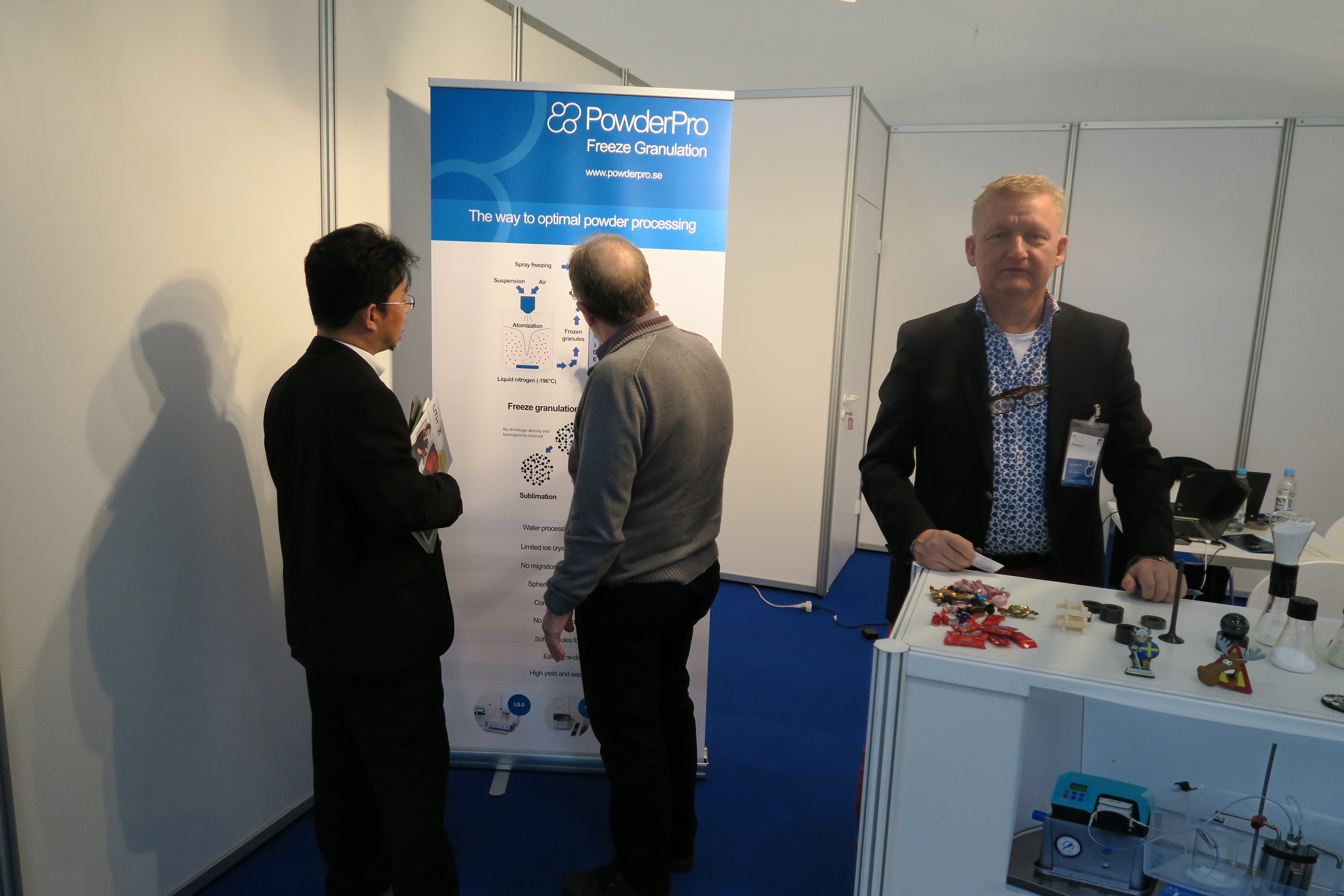
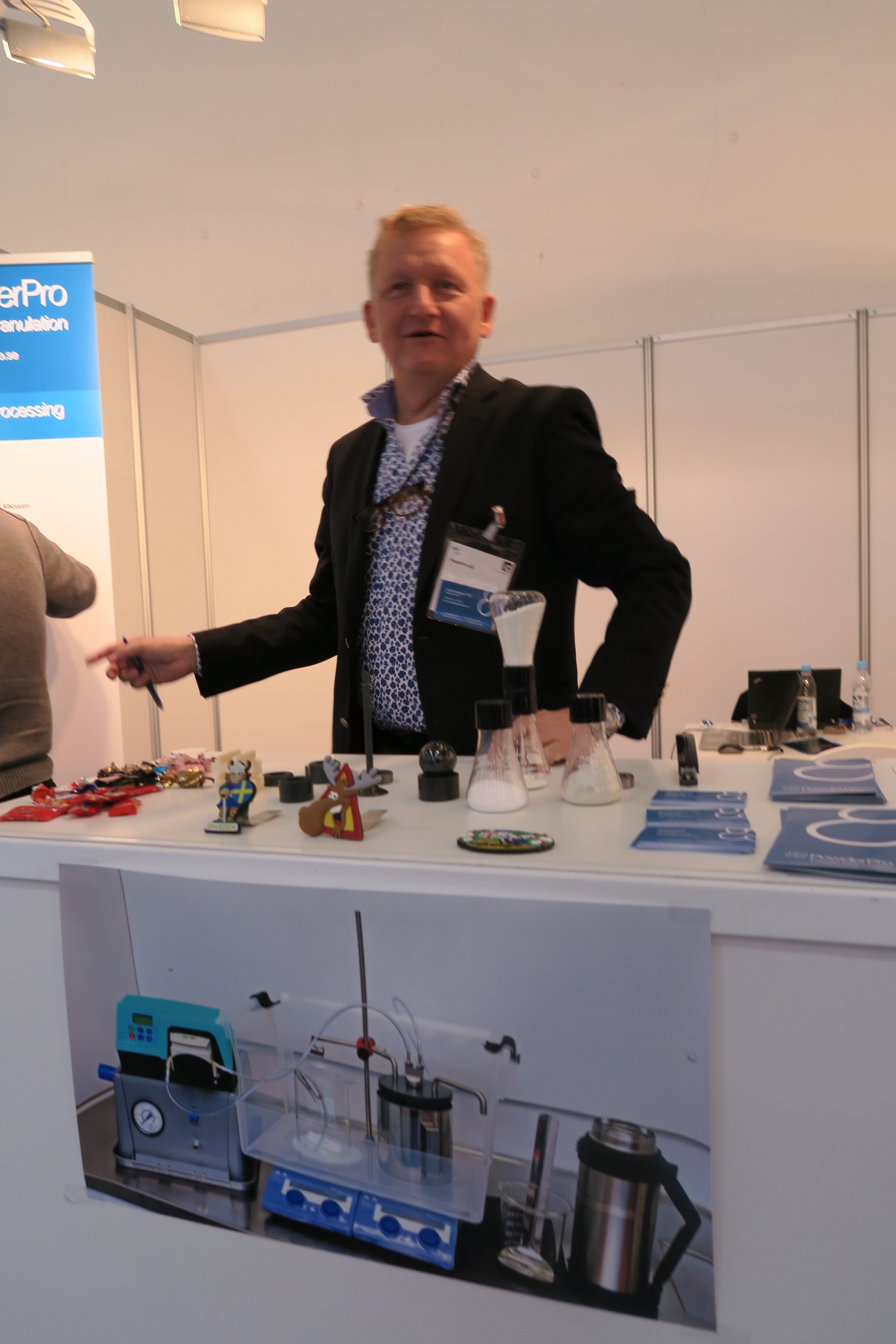
Third day at CERAMITEC 2015

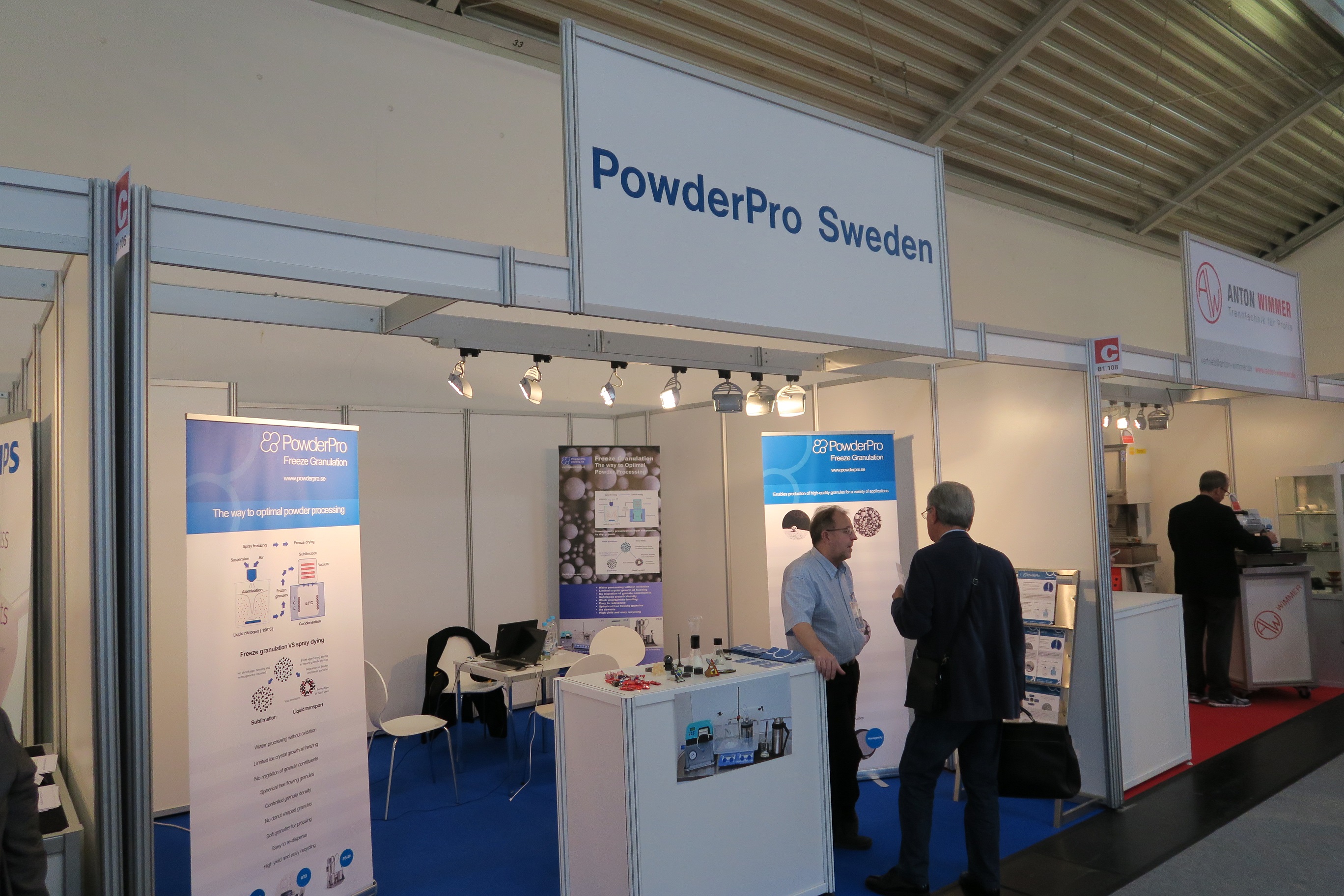
Third day at CERAMITEC 2015 on Oct 22th with good discussions upon processing of different powder material by Freeze Granulation and the advantages regarding granule homogeneity and the impact on the ultimate material performance it brings.

Please contact us and we will further discuss the opportunities with Freeze Granulation on your powder system and read more on technology and we propose a Granulation Test of your powder system.

Third day at CERAMITEC 2015 Third day at CERAMITEC 2015-1 Third day at CERAMITEC 2015-2

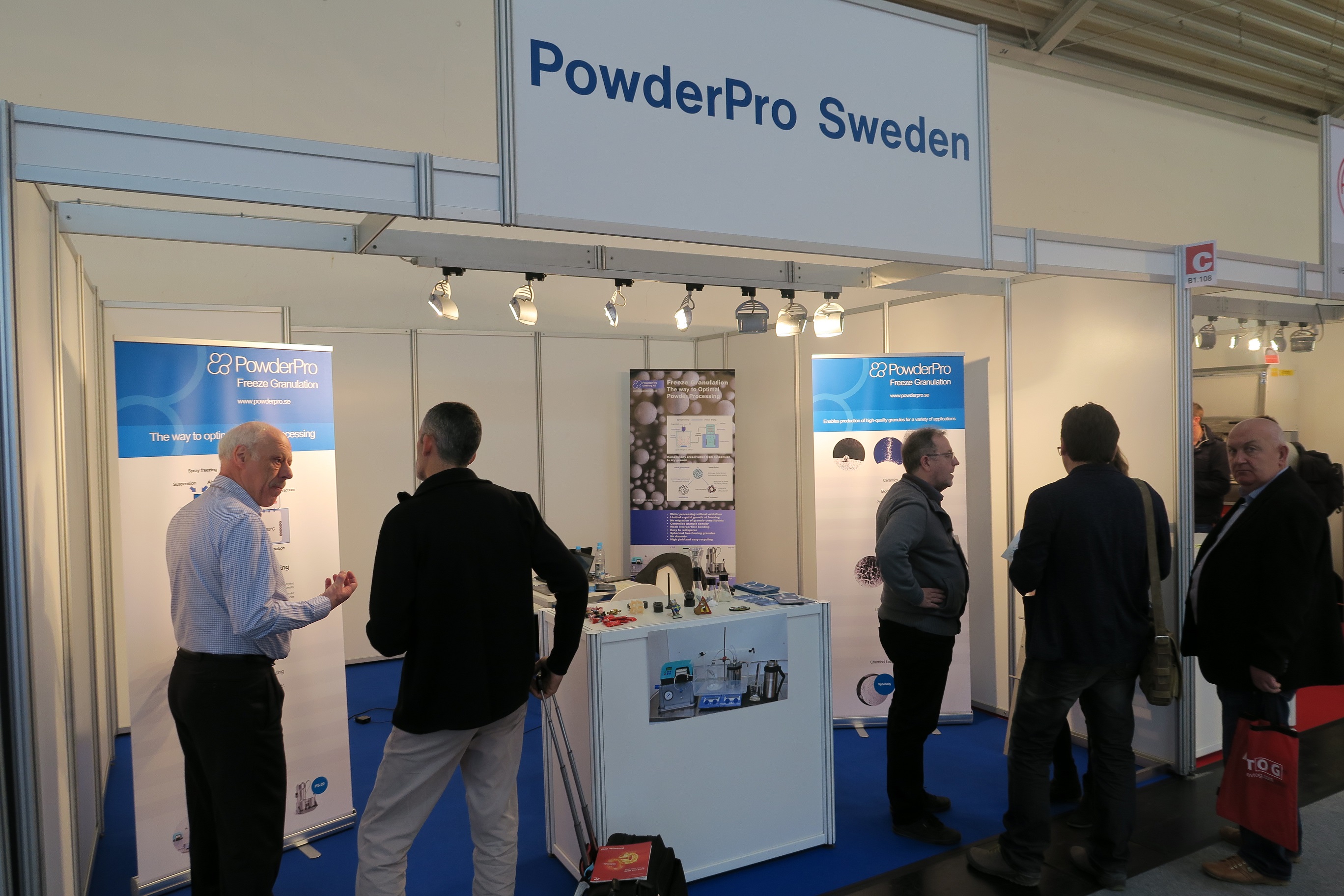
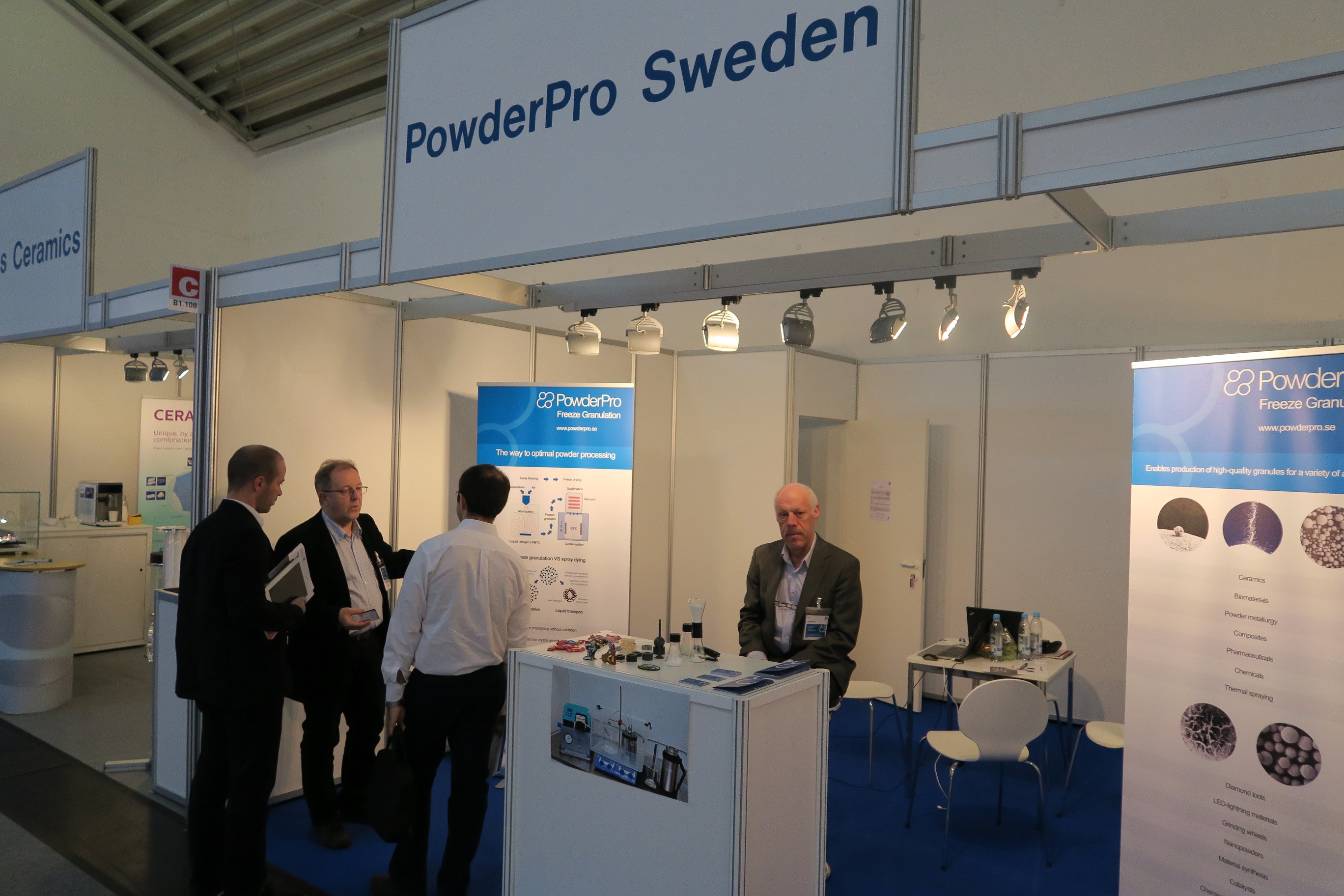
Second day at CERAMITEC 2015

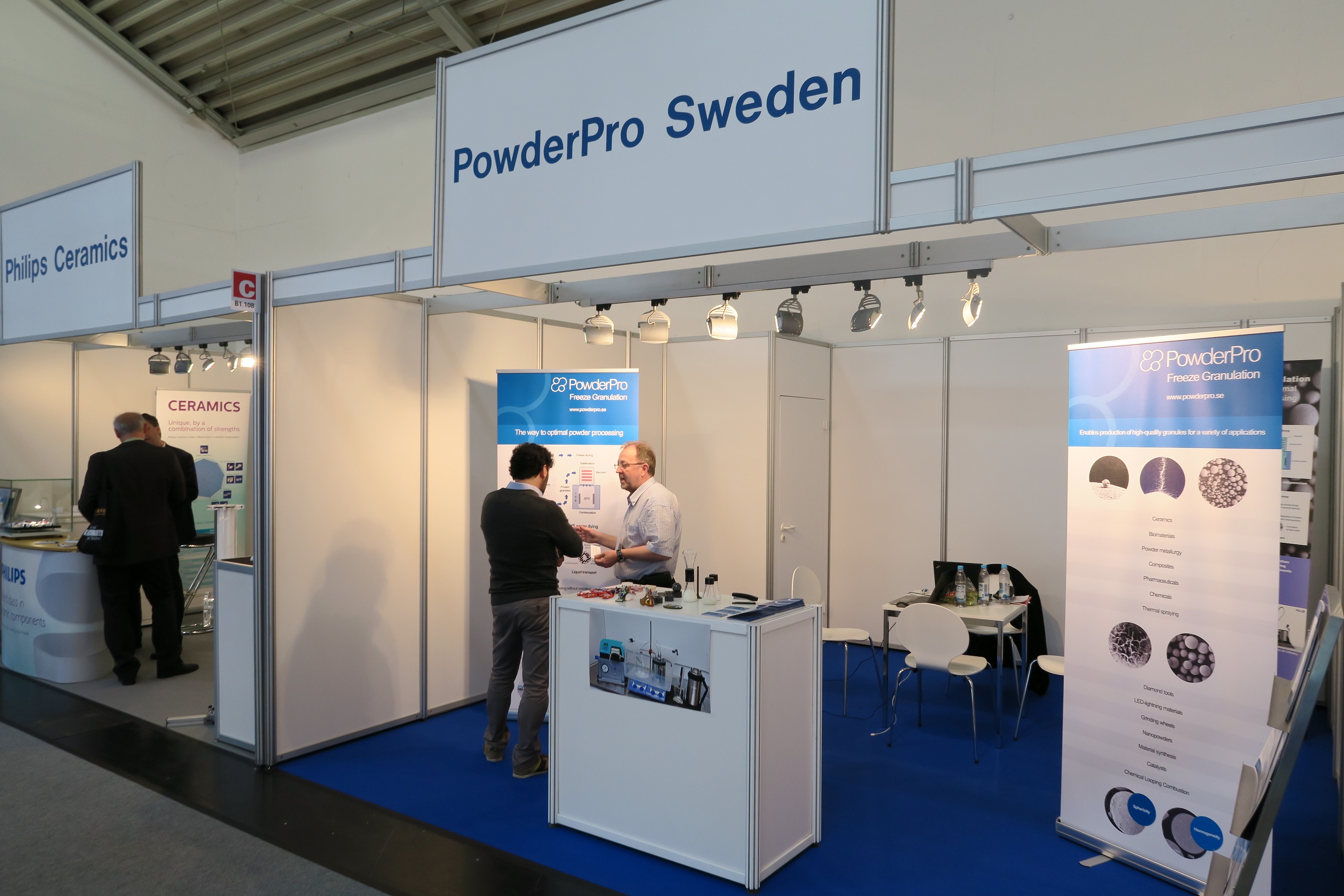
Second day at CERAMITEC 2015 on Oct 21th with good discussions upon processing of different powder material by Freeze Granulation and the advantages regarding granule homogeneity and the impact on the ultimate material performance it brings.

Please contact us and we will further discuss the opportunities with Freeze Granulation on your powder system and read more on technology and we propose a Granulation Test of your powder system.

Second day at CERAMITEC 2015 Second day at CERAMITEC 2015-1 Second day at CERAMITEC 2015-2

Convert powder to granules

Convert powder to granules by Freeze Granulation for to get homogeneous granules.

Convert powder to granules by Freeze Granulation LS-2

Published
Categorized as News