
By using Freeze Granulation or Spray Freeze Drying it’s possible to make spherical, homogeneous and dust-free granules with optimal flowability which is critical for automatic uniaxial pressing of for ex ceramics and metal powders.
News
ECerS XIII Conference – Limoges
PowderPro will have a stand at the exhibition at ECerS XIII Conference (European Ceramic Society) in Limoges, France from the 23rd to the 27th of June 2013. We look forward to meet costumers, partners and new contacts for interesting discussions in our stand!
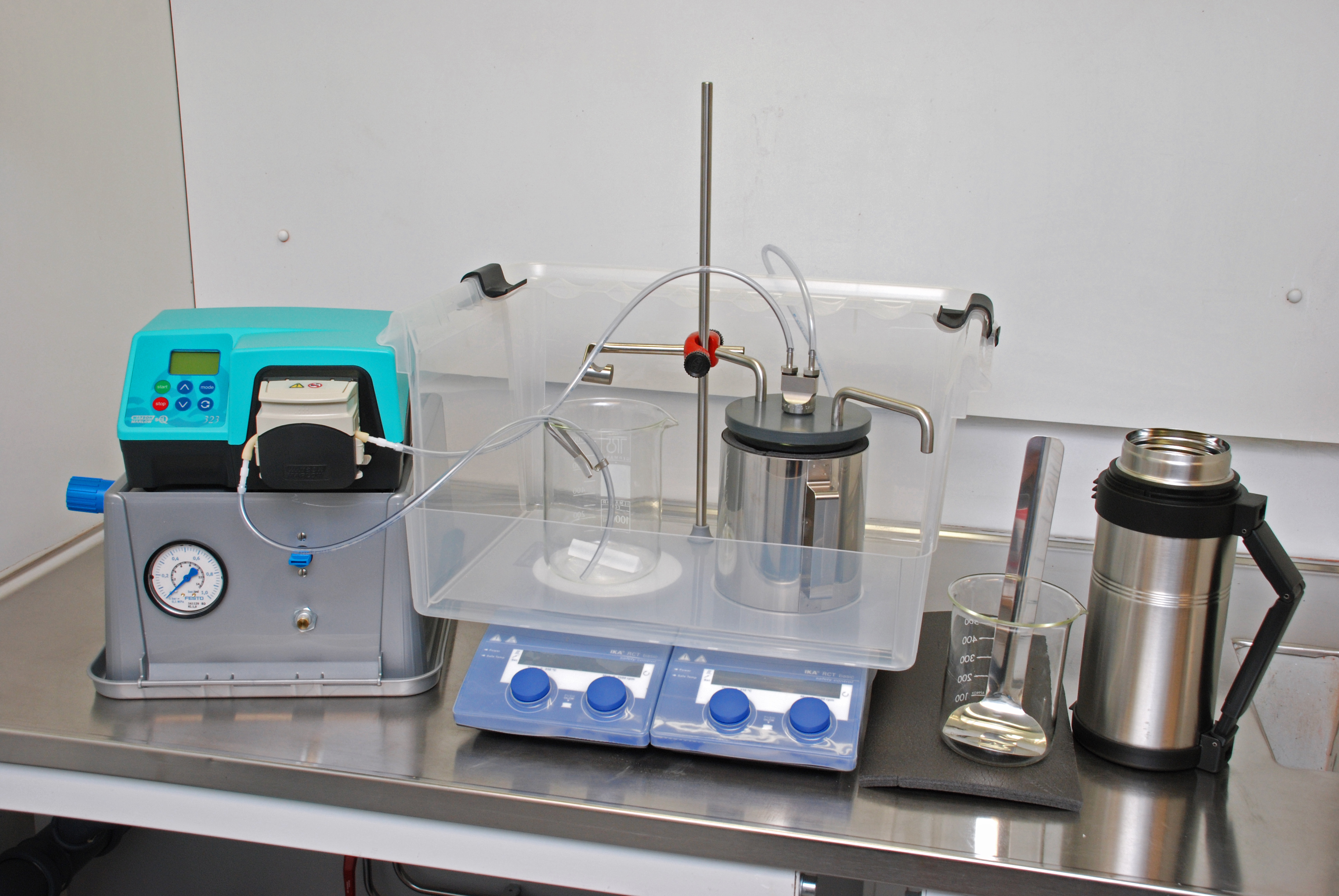
We plan to have our equipment available for you to see the process of Freeze Granulation.
Please contact us and we will further discuss the opportunities with Freeze Granulation on your powder system and read more on technology and we propose a Granulation Test of your powder system.
How to make granules from powders
Homogeneous Granules by Freeze Granulation
By using Freeze Granulation or Spray Freeze Drying it’s possible to make spherical, homogeneous and dust-free granules with optimal flowability which is critical for automatic uniaxial pressing of for ex ceramics and metal powders.
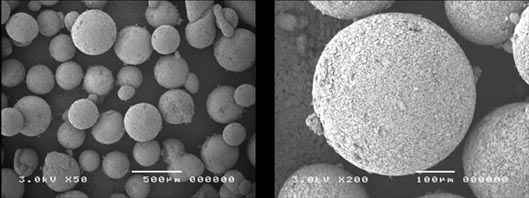
You can expect spherical and homogenous granules of powders in terms of distribution of particle size and other possible additives you want to use. The granules with a size distribution in the range of 50-300 microns will have weak inter particle bonding making them easy to break down in pressing or re-disperse into another formulation. Very much depend upon how you intend to process the powder and depending on that, adaptation can be made.
Please contact us and we will further discuss the opportunities with Freeze Granulation on your powder system and read more on technology and we propose a Granulation Test of your powder system.
Nano Diamond Powder
Freeze Granulation is today being used for mixing, granulation and drying of nano diamond powders. The resulting granules have a homogeneous distribution of nano diamond particles, fillers, binders and nano pores. Please go to Contact and ask for more information and for a Test-Granulation.

Preparation of PIM or Extrusion Feedstock
Freeze Granulation of PIM or Extrusion Feedstock
Powder injection molding (PIM) and extrusion are powder shaping techniques that typically involve preparation of high viscous feedstock making it difficult to achieve full homogeneity. Especially if the powders are fine (submicron or nano) and/or if it is a composite material. By doing an initial preparation of a low viscous (based on water or organic) suspension the powders can be properly de-agglomerated, dispersed and homogenized. Other constituents aimed for the PIM or extrusion process can be added prior to freeze granulation. The result will be a homogenized, soft and dust free powder, easy to mix and disperse into a feedstock for PIM or extrusion at high powder concentration and homogeneity, promoting sintering and ultimate material performance.
Please contact us for more information and a test-granulation of your powder system.
Granule drying
In the Freeze Granulation process, freeze drying/lyophilizing is used as the granule drying method for to sublimate the nano ice and there by avoid melting of the frozen granulate.
Please contact us for more information and a test-granulation of your powder system.

Superabrasive grinding tools
Homogeneous superabrasive grinding tools by Freeze Granulation
Freeze Granulation is today being used for the production of high quality superabrasive grinding tools, where the superabrasive grains are homogeneously distributed in the grinding tool. This results in a grinding wheel with higher grinding capacity and longer grinding and cutting tool life.
Please contact us for more information and a test-granulation of your powder system.
Wet granulation
Freeze Granulation – homogeneous wet granulation of powders
Freeze Granulation is a wet granulation method where the powders, chemicals and binders are first mixed and dispersed in a solvent. In the next step the homogeneous slurry is pumped and sprayed through a nozzle to form droplets, which are sprayed into liquid nitrogen for instant freezing. In the final step the frozen granulate is moved to a freeze dryer where the solvent is sublimated leaving spherical, dust-free and homogeneous granules. The solvent could be water or organic solvents with a freezing point close to zero degree, like cyclohexane.
Please contact us for more information and a test-granulation of your powder system.
Nano ice formation in granules
Nano ice in granules by Freeze Granulation
The formation of nano ice in the Freeze Granulation process is a key factor for the unique homogeneity of particles and binders achieved in the resulting granules. This is especially important for nanopowders, fine particles and binders where migration of these could occur during conventional drying, like spray drying.
Please contact us for more information and a test-granulation of your powder system.

Granulation equipment
PowderPro supplies equipment for granulation of various powders and chemicals. Freeze Granulation for improved granule properties compared with spray drying. Granules with no void formation, no migration of fine particles or binders, and no formation of hard dry shell.
Spray cooling or rather called spray freezing is the first step in the freeze granulation process where a suspension is atomized, sprayed with a nozzle, into a chamber with liquid nitrogen. The small droplets are then rapidly frozen with a minimum of ice crystal growth. The frozen material (granules) are then transferred to a freeze dryer/lyophilizer where the ice is removed by sublimation, i e never go through a liquid state that ensure homogeneity preservation.
Please contact us for more information or if you have specific questions on your system and for a test-granulation of your powder system.