Homogeneous superabrasive grinding tools by Freeze Granulation
Freeze Granulation is today being used for the production of high quality superabrasive grinding tools, where the superabrasive grains are homogeneously distributed in the grinding tool. This results in a grinding wheel with higher grinding capacity and longer grinding and cutting tool life.
Freeze Granulation – homogeneous wet granulation of powders
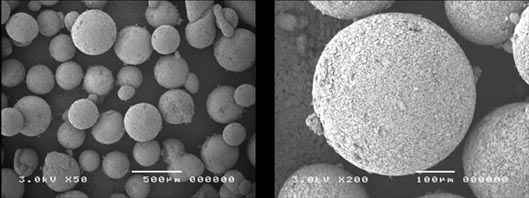
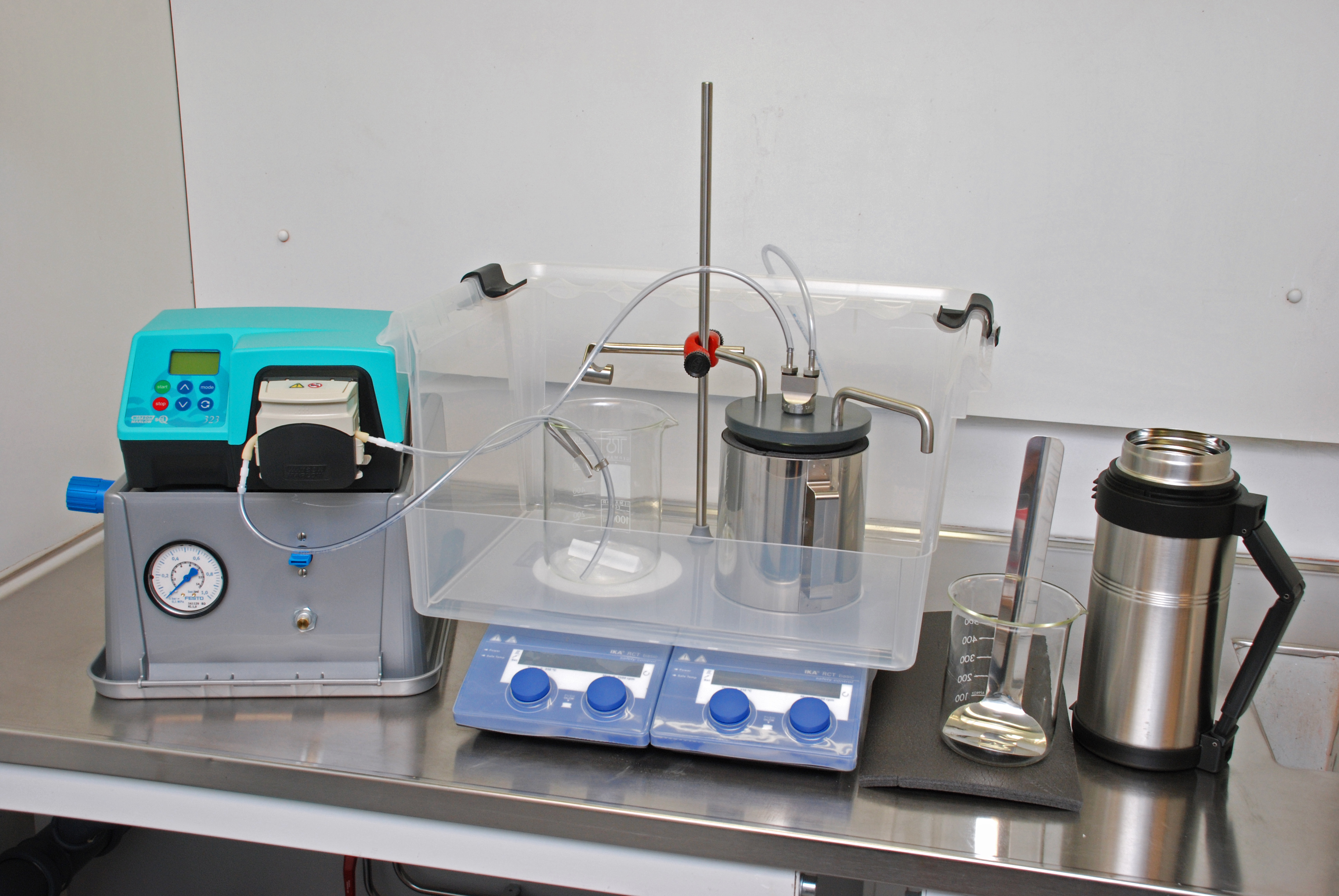
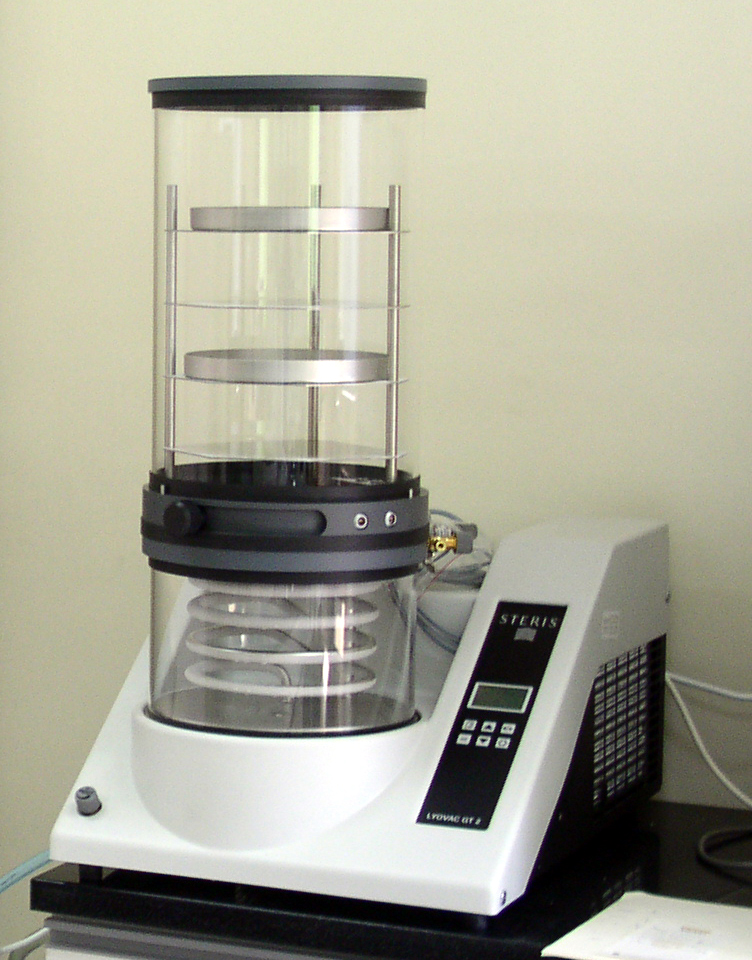
Freeze Granulation is a wet granulation method where the powders, chemicals and binders are first mixed and dispersed in a solvent. In the next step the homogeneous slurry is pumped and sprayed through a nozzle to form droplets, which are sprayed into liquid nitrogen for instant freezing. In the final step the frozen granulate is moved to a freeze dryer where the solvent is sublimated leaving spherical, dust-free and homogeneous granules. The solvent could be water or organic solvents with a freezing point close to zero degree, like cyclohexane.
The formation of nano ice in the Freeze Granulation process is a key factor for the unique homogeneity of particles and binders achieved in the resulting granules. This is especially important for nanopowders, fine particles and binders where migration of these could occur during conventional drying, like spray drying.
PowderPro supplies equipment for granulation of various powders and chemicals. Freeze Granulation for improved granule properties compared with spray drying. Granules with no void formation, no migration of fine particles or binders, and no formation of hard dry shell.
Spray cooling or rather called spray freezing is the first step in the freeze granulation process where a suspension is atomized, sprayed with a nozzle, into a chamber with liquid nitrogen. The small droplets are then rapidly frozen with a minimum of ice crystal growth. The frozen material (granules) are then transferred to a freeze dryer/lyophilizer where the ice is removed by sublimation, i e never go through a liquid state that ensure homogeneity preservation.
Please contact us for more information or if you have specific questions on your system and for a test-granulation of your powder system.

Transparent and translucent ceramics by Freeze Granulation
Freeze Granulation is today being used for commercial manufacturing of transparent and translucent ceramics. The main advantage is to achieve a homogeneous distribution of the starting material which will result in rapid reaction and sintering at low temperature where grain growth of the material will be avoided.
Spray Freeze Drying for Soft Granules by Freeze Granulation
Freeze drying is an important processing step in Freeze Granulation where we sublimate the solvent (ice if water) from our spray frozen (spray freezed) granules, resulting in a free-flowing and dust-free granulated material suitable for pressing of components.
Freeze Granulation produce flowable and crushable (soft) granules suitable for die pressing applications. Spray drying yield flowable, but hard granules which are difficult to cruch during die pressing.
Freeze Granulation offers a unique technology for to make homogeneous LED phosphor materials resulting in improved photoluminescence properties and thus, Freeze Granulation will give you high power LEDs with superior final properties. Most LEDs that are emitting a soft white light have been covered by a yellowish phosphor coating or plate usually made of cerium doped yttrium aluminium garnet (YAG:Ce) crystals, which have been processed using powder processing techniques and bound into a ceramic plate, glass or with a resin.
If you are looking for optimal homogeneity in your granulated material, then you should evaluate our unique granulation technology – Freeze Granulation!
Today, Freeze Granulation is the only granulation technology that will preserve the homogeneity from suspension to dry granule, which is crucial for good results in most processes.
Spray cooling or rather called spray freezing is the first step in the freeze granulation process where a suspension is atomized, sprayed with a nozzle, into a chamber with liquid nitrogen. The small droplets are then rapidly frozen with a minimum of ice crystal growth. The frozen material (granules) are then transferred to a freeze dryer where the ice is removed by sublimation, i e never go through a liquid state that ensure homogeneity preservation.
Spray-freezing and freeze drying – Freeze Granulation
PowderPro AB develop, manufacture, market and sell equipment and know-how for Freeze Granulation, spray freezing and subsequent freeze drying (lyophilization or cryodesiccation). Freeze Granulation was developed in late 1980s at Swedish Ceramic Institute in Göteborg and it is also a development of Spray Freeze Drying (SFD) and Spray Freezing into Liquid (SFL).
Spray cooling or rather called spray freezing is the first step in the freeze granulation process where a suspension is atomized, sprayed with a nozzle, into a chamber with liquid nitrogen. The small droplets are then rapidly frozen with a minimum of ice crystal growth. The frozen material (granules) are then transferred to a freeze dryer where the ice is removed by sublimation, i e never go through a liquid state that ensure homogeneity preservation.
Below you can see an illustration of the Freeze Granulation process.